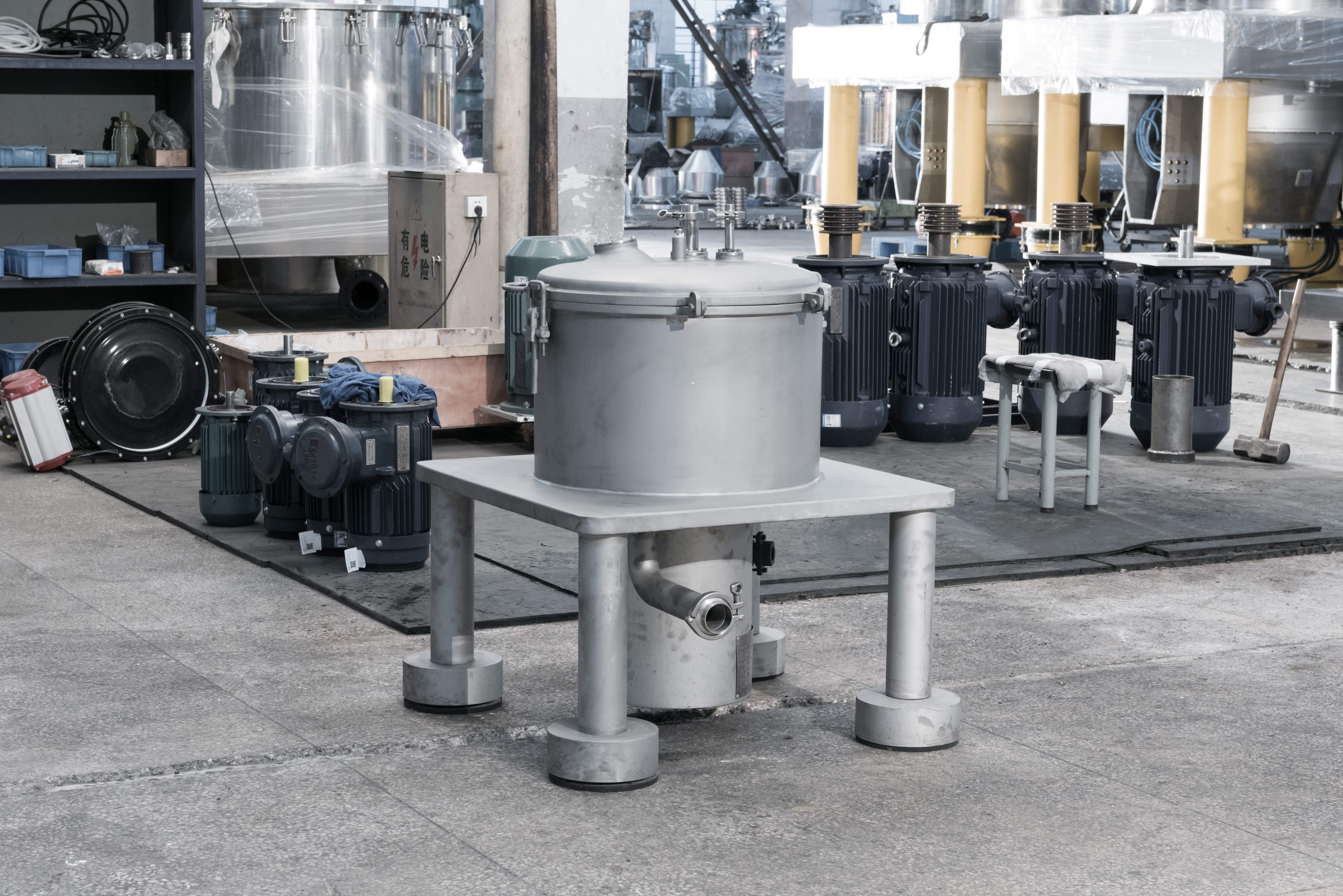
Automatische Entleerungszentrifugen haben sich von einer Nischen-Automatisierungsfunktion zu einer Standardanforderung bei hochdurchsatzorientierter Feststoff-Flüssigkeits-Trennung entwickelt. Der treibende Faktor hinter diesem Wandel ist nicht allein die Einsparung von Arbeitskraft – obwohl dies allein in vielen Betrieben bereits die Investition rechtfertigt –, sondern die grundlegende Veränderung der Konzeption von Produktionslinien. Eine manuell entleerte Zentrifuge bestimmt den Takt des gesamten nachgeschalteten Prozesses. Der Bediener muss die Maschine anhalten, das Gehäuse öffnen, die Feststoffe mit einem Schaber oder Spaten entfernen, das Gehäuse wieder schließen und die Maschine neu starten. Dieser Zyklus führt sowohl hinsichtlich Zeit als auch Produktqualität zu Schwankungen. Die Technologie der automatischen Entleerung beseitigt diese Schwankungen bereits an der Quelle.
Die frühesten automatischen Entladungssysteme basierten auf einer einfachen Schaberklinge, die in den Korb einklappte, um den Filterkuchen abzuschaben. Sie funktionierte gut bei frei fließenden kristallinen Materialien, hatte jedoch Schwierigkeiten mit klebrigen, plastischen oder faserigen Feststoffen. Die Klinge rutschte über das Material hinweg, anstatt es zu durchschneiden, und hinterließ eine Restschicht, die sich über mehrere Zyklen hinweg ansammelte. Diese Restschicht führte schließlich dazu, dass der Korb aus dem Gleichgewicht geriet.
Moderne Schaberdesigns beinhalten mehrere Fortschritte. Antriebe mit variabler Drehzahl für die Schaber ermöglichen es der Schneide, sich je nach Konsistenz des Materials mit unterschiedlichen Geschwindigkeiten dem Kuchen zu nähern. Eine Dehnungsmessdose oder ein Drehmomentsensor am Schaberarm liefert Echtzeit-Rückmeldungen, sodass das Steuerungssystem die Schaberkraft an den Widerstand des Kuchens anpassen kann. Einige neuere Maschinen verwenden eine oszillierende Schaberbewegung, die den Kuchen durch eine Scherwirkung statt durch eine rein schneidende Aktion aufbricht. Eine Anlage zur Aufbereitung von feuchter Calciumcarbonat-Suspension berichtete, dass das neue Schaberdesign die Restkuchendicke von 12 Millimetern auf unter 2 Millimeter reduzierte, wodurch das Intervall zwischen den Reinigungszyklen des Korbs von wöchentlich auf vierteljährlich verlängert wurde.
Die Werkstoffwissenschaft hinter Schaberklingen hat sich ebenfalls weiterentwickelt. Klingen mit Hartmetallspitzen aus Wolframcarbid bewältigen heute abrasive Einsatzstoffe, die eine Standard-Klinge aus Edelstahl innerhalb weniger Wochen durchschleifen würden. Für Anwendungen im Lebensmittelbereich verhindern Polymerklingen mit einem spezifischen Härteprofil metallische Kontaminationen, gewährleisten aber dennoch eine saubere Entleerung.
Der technologische Fortschritt bei automatischen Entleerungszentrifugen beruht weniger auf den mechanischen Komponenten als vielmehr auf dem Steuerungssystem, das diese koordiniert. Frühe automatische Entleerungseinheiten arbeiteten mit einfachen Zeitsteuerungen: Die Maschine lief für eine festgelegte Dauer und entleerte anschließend für eine feste Zeitspanne – unabhängig davon, was tatsächlich im Korbschacht geschah. Dieser Ansatz verschwendete Kapazität bei leicht zu trennenden Einsatzstoffen und hinterließ bei schwierigeren Materialien nassen Kuchen.
Moderne Systeme verwenden eine Kombination aus Sensoren, um den optimalen Entladepunkt zu bestimmen. Eine Lastzelle unter dem Lagergehäuse misst die Masse des Korbinhalts in Echtzeit. Sobald die Masse nicht mehr zunimmt – was bedeutet, dass der Filterkuchen seine maximale Dichte erreicht hat – beginnt der Entladezyklus. Ein Leitfähigkeitssensor in der Filtratleitung erkennt, wenn die Mutterlauge ausgepresst wurde und der Filterkuchen zur Entladung bereit ist. Einige fortschrittliche Anlagen verfügen zudem über einen Nahinfrarotsensor, der die Restfeuchte im Filterkuchen misst und die Entladung erst auslöst, sobald das vorgegebene Feuchteziel erreicht ist.
Dieser sensorbasierte Ansatz gewährleistet eine konstant hohe Kuchenqualität über alle Schichten und Bediener hinweg. Ein pharmazeutischer Zwischenproduktebetrieb in Shanghai, der von einer zeitgesteuerten auf eine sensorbasierte automatische Entleerung umgestiegen ist, berichtete, dass die Schwankung des Kuchenfeuchtegehalts von ±4,5 Prozentpunkten auf ±0,8 Prozentpunkte sank. Diese Konsistenz führte unmittelbar zu weniger Trocknungsproblemen in nachgeschalteten Prozessschritten und zu einer 7-prozentigen Reduktion des gesamten Energieverbrauchs in der Trocknungsstufe.
Die neuesten automatischen Entwässerungszentrifugen verfügen über integrierte Diagnosesysteme, die Leistungskennwerte verfolgen und Abweichungen erkennen, bevor diese zu Ausfällen führen. Die Vibrationsanalyse gehört mittlerweile zur Standardausstattung: Ein dreiaxialer Beschleunigungssensor am Lagergehäuse überwacht kontinuierlich den mechanischen Zustand der Maschine. Das Steuerungssystem speichert Referenzvibrationsmuster für jede Phase des Zyklus – Beschleunigung, Trennung, Entleerung und Verzögerung. Jede signifikante Abweichung löst eine Warnmeldung aus und führt in einigen Fällen zu einer automatischen Anpassung der Zyklusparameter.
Die Temperaturüberwachung ist ebenfalls fortschrittlicher geworden. Statt nur eines einzelnen Thermoelements am Lagergehäuse platzieren moderne Maschinen Sensoren an mehreren Stellen – im Getriebeölsumpf, im Hydraulikflüssigkeitsbehälter, in den Motorwicklungen und in der Prozesskammer. Ein Temperaturanstieg an einer dieser Stellen liefert eine Frühwarnung vor sich entwickelnden Problemen. Das System kann sogar Temperaturtrends mit bestimmten Betriebsbedingungen korrelieren. Ein allmählicher Anstieg der Getriebetemperatur während Hochleistungs-Läufen könnte darauf hindeuten, dass der Ölkühler gereinigt werden muss, während ein plötzlicher Temperatursprung während des Entladens auf ein Problem mit dem Hydraulikdruck hinweisen könnte.
Die Diagnosedaten dienen nicht nur der Darstellung auf dem Bildschirm. Die meisten Systeme verfügen mittlerweile über Fernüberwachungsfunktionen, sodass Service-Teams die Maschinenleistung ohne vor Ort zu sein analysieren können. Diese Funktion erwies sich während der jüngsten Reisebeschränkungen als unschätzbar: Ein Servicetechniker in Europa konnte mithilfe ausschließlich ferngesteuerter Zugriffe eine Störung an einer automatischen Entladungszentrifuge in Südostasien diagnostizieren und die Reparatur schrittweise anleiten.
Einer der weniger diskutierten technologischen Fortschritte bei automatischen Entladungszentrifugen betrifft das Energiemanagement. Die Bremsenergie, die beim Abbremsen einer großen rotierenden Masse freigesetzt wird, ist erheblich. Regenerative Antriebe erfassen diese Energie und speisen sie wieder ins elektrische Versorgungssystem der Anlage ein, statt sie – wie bei herkömmlichen Widerstandsbanken – als Wärme zu dissipieren. Die bei jedem Stoppszyklus zurückgewonnene Energie kann 15 bis 20 Prozent der Energie betragen, die während des vorangegangenen Betriebszyklus verbraucht wurde.
Drehzahlveränderliche Antriebe sind mittlerweile ebenfalls Standard bei modernen automatischen Entlademaschinen. Statt den Motor mit voller Drehzahl laufen zu lassen und ihn zum Stillstand zu bremsen, ermöglichen frequenzgesteuerte Antriebe (VFDs) eine gesteuerte Beschleunigung und Verzögerung, wodurch mechanische Belastungen minimiert und der Spitzenstrombedarf reduziert wird. Die Kombination aus rekuperativer Bremsung und VFD-Steuerung senkt den Nettoenergieverbrauch einer automatischen Entladezentrifuge typischerweise um 12 bis 18 Prozent gegenüber einer Einheit mit fester Drehzahl und mechanischer Bremse.
Die kumulative Wirkung dieser technologischen Fortschritte ist nicht nur eine zuverlässigere Maschine, sondern eine grundlegende Veränderung der Produktionsplanung. Betriebe mit manuellen Entlademaschinen erstellen ihre Produktionspläne anhand der Verfügbarkeit des Bedienpersonals und der Ausfallzeiten der Maschine. Betriebe mit modernen automatischen Entlademaschinen planen hingegen auf Grundlage der Verfügbarkeit der Rohstoffe und der Marktnachfrage, da der Trennschritt nicht mehr die Engstelle darstellt.
Der Markt für Zentrifugen mit automatischer Entladung spiegelt diese Verschiebung wider. Die Prognosen deuten auf ein Wachstum von etwa 2,45 Milliarden Dollar im Jahr 2025 auf 4,5 Milliarden Dollar im Jahr 2035 hin, was einer jährlichen Wachstumsrate von etwa 6,3 Prozent entspricht. Dieses Wachstum wird nicht allein durch die Nachfrage nach Ersatzbetrieben angetrieben, sondern durch neue Anlagen, bei denen die automatische Entladetechnologie Produktionslinien ermöglicht, die bisher nicht möglich waren.
Hersteller mit einer langjährigen Erfahrung in der Innovation in diesem Bereich, darunter Huada, treiben die Technologie mit Verbesserungen in der Sensorenintegration, Steuerungsalgorithmen und mechanischer Haltbarkeit weiter voran. Die heute verfügbaren Maschinen stellen eine Generation der Raffinesse dar, die die automatische Entladung von einer Bequemlichkeit zu einem Wettbewerbsvorteil gemacht hat.
 Aktuelle Nachrichten
Copyright © 2025 Jiangsu Huada Centrifuge Co., Ltd. Alle Rechte vorbehalten Datenschutzrichtlinie
Nr. 88 Qigan Straße, Yangshe Stadt, Zhangjiagang, Provinz Jiangsu, China
Copyright © 2025 Jiangsu Huada Centrifuge Co., Ltd. Alle Rechte vorbehalten Datenschutzrichtlinie
 EN
EN
 AR
AR
 HR
HR
 CS
CS
 DA
DA
 NL
NL
 FI
FI
 FR
FR
 DE
DE
 EL
EL
 HI
HI
 JA
JA
 KO
KO
 NO
NO
 PL
PL
 PT
PT
 RO
RO
 RU
RU
 ES
ES
 SV
SV
 TL
TL
 ID
ID
 LT
LT
 SR
SR
 SK
SK
 UK
UK
 VI
VI
 HU
HU
 TH
TH
 TR
TR
 FA
FA
 MS
MS
 IS
IS
 LO
LO
 LA
LA
 MN
MN
 MY
MY
 KK
KK
 UZ
UZ
 IT
IT