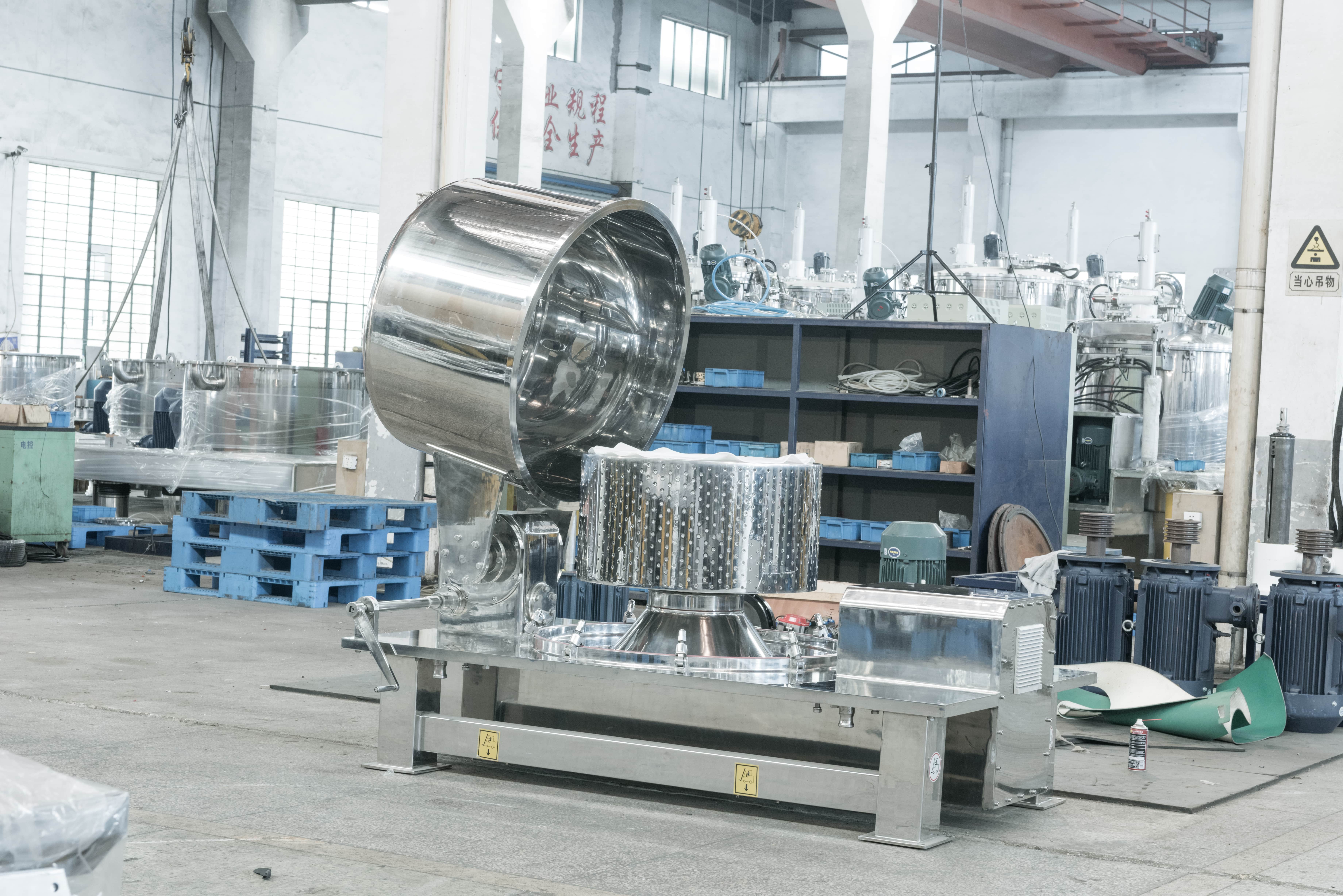
Een verticale bovenaf ontladende centrifuge neemt een unieke positie in op de fabrieksvloer. Het voert batchfiltratiecycli uit waarbij vaste stoffen schoon uit de mand moeten vallen, vaak bij farmaceutische tussenproducten, fijne chemische batches of speciale voedselingrediënten. Het ontwerp is eenvoudig: een mand die aan de bovenzijde is opgehangen, een ontladingsgoot aan de onderzijde en een aandrijflijn die veel start-stop-cycli ondergaat. Maar eenvoud betekent niet automatisch eenvoudig wanneer het gaat om reparaties. De servicegeschiedenis van deze machines vertelt een duidelijk verhaal: het grootste deel van de ongeplande stilstand is terug te voeren op drie zaken die vaak over het hoofd worden gezien tijdens routineonderhoud.
Het bovenste lager in een verticale centrifuge met bovenzijdige afvoer draagt de gehele roterende mand. Bij elke cyclus wordt dat lager belast met radiale en axiale krachten terwijl de slurry versnelt, scheidt en vertraagt. Een chemische fabriek in Shandong, waar een eenheid van 1.200 millimeter werd gebruikt op een ontwateringslijn voor natriumsulfaat, ondervond gedurende zes maanden geleidelijk toenemende trillingen. De onderhoudslogboeken toonden regelmatig smeren aan, maar niemand had tijdens de twee vorige onderhoudsintervallen de speling van het lager gecontroleerd met een wijzerplaatmeter. Toen het team de assemblage uiteindelijk verwijderde, bleek de loopbaan van het lager over dertig procent van zijn oppervlak te zijn uitgevallen (spalling). De reparatiekosten bedroegen ongeveer twaalf procent van de aanschafprijs van een nieuwe machine, maar de werkelijke schade ontstond door negen dagen productieverlies terwijl men wachtte op een vervangend lager uit het buitenland. Deze fabriek houdt nu vooraf gemonteerde lagercartridges op voorraad voor hun centrifuges met bovenzijdige afvoer. .
De werkwijze voor onderhoud die effectief is, bestaat uit het meten van de axiale speling bij elke geplande stilstand. Een toename van 0,05 millimeter naar 0,12 millimeter wijst erop dat het lager in zijn behuizing verschuift. Dit vroegtijdig detecteren zet wat anders een catastrofale storing zou kunnen worden om in een geplande vervanging van vier uur. De as zelf valt zelden uit, tenzij een lagerseizoen de as oververhit, maar de afdichtingen rond de as – met name de onderste afdichting waar moederlijkheid omhoog kan kruipen – moeten in corrosieve toepassingen om de twaalf tot achttien maanden worden vervangen.
Onbalansomstandigheden staan op de tweede plaats als meest voorkomende oorzaak van reparaties bij verticale centrifuges met bovenzijdige afvoer. De mand hoopt geleidelijk ongelijkmatige taartafzettingen op, vooral wanneer de toevoerdistributiepijp van het centrum afwijkt. Een installatie die kaliumchloride verwerkt, registreerde eens een daling van de doorvoer met tweeëntwintig procent gedurende vier maanden. De operators gaven de kristallisator stroomopwaarts de schuld. De werkelijke oorzaak was een mand die een onbalans van 180 gram had ontwikkeld door lokaal aanslibben van het zeefvlak in één kwadrant. De trillingschakelaar van de machine bleef steeds vaker uitschakelen bij steeds lagere snelheden, waardoor het besturingssysteem de duur van de hoogtesnelheidsfase moest verkorten.
Het balanceren van een bovenzijdig ontladende mand vereist gespecialiseerde apparatuur: een star-lagerbalansmachine die de mand kan laten draaien met de bedrijfssnelheid terwijl de correctiegewichten worden gemeten. Er bestaan veldbalanssets, maar deze kunnen de precisie van een werkplaatsbalansopstelling niet evenaren. De praktische regel is: haal de mand om de twee jaar voor een volledige balanscontrole, of onmiddellijk na elk incident dat de structuur van de mand mogelijk heeft vervormd, zoals een ongecontroleerde oversnelheid of een zware klap tijdens handmatige ontlading. De kosten van een professionele herbalance bedragen ongeveer drie tot vijf procent van de vervangingswaarde van de machine en herstellen doorgaans de capaciteit tot negenentachtig procent van de oorspronkelijke waarde.
De bovenzijde-afvoerconfiguratie maakt gebruik van een dynamische afdichting waarbij de roterende as door het stationaire behuizingdeel loopt. Deze afdichting wordt voortdurend blootgesteld aan een ‘gevecht’ tussen de procesvloeistof die probeert te ontsnappen en de noodzaak om de smering binnen te houden. De oorzaken van storing variëren: lipafdichtingen verharden door chemische blootstelling, mechanische vlakke afdichtingen verliezen hun gepolijste oppervlak door droogdraaien, en labyrintafdichtingen verstoppen door geïncrusteerde zouten.
Een middelgrote fabriek voor kleurstofintermediaren in Zhejiang had herhaaldelijk te maken met een probleem waarbij moederlijkheid langs de afdichting lekte en de lagerolie verontreinigde. De olieanalyse toonde elk kwartaal een stijgende waterinhoud, maar het onderhoudsteam behandelde dit als een klein ongemak totdat het lager tijdens een nachtdienst op zondag catastrofaal uitviel. De reparatie omvatte niet alleen een nieuw lager en een nieuwe afdichting, maar ook een bewerking van de as, omdat de afdichting een groef in de as had versleten. De totale kosten bedroegen ongeveer achttien procent van de prijs van een nieuwe machine. De oplossing die uiteindelijk werkte: overschakelen van een enkele mechanische afdichting naar een dubbele afdichtingsopstelling met een barrièrevloeistof, en het installeren van een nabijheidssensor om eventuele vloeistofmigratie te detecteren voordat deze de lagerholte bereikte.
Het aandrijfsysteem van een verticale centrifuge met bovenzijdelijke afvoer—meestal bestaande uit een motor, een riemaandrijving of versnellingsbak en een rem—ondergaat een unieke belastingscyclus. Frequent starten en stoppen veroorzaakt warmte en mechanische spanning die machines met geleidelijke snelheidsveranderingen nooit ondervinden. Bij riemaangedreven units treedt riemrek en glazering op, wat de bedrijfssnelheid verandert en de effectieve G-kracht vermindert. Een installatie die drie ploegen per dag draait met een unit met bovenzijdelijke afvoer, kan elke acht tot tien maanden een nieuwe riemset nodig hebben. De waarschuwingssignalen zijn subtiel: een lichte vertraging bij het versnellen van de mand of een hogere stroomopname dan normaal tijdens de versnelling.
Aandrijfunits met versnellingsbak vormen een andere uitdaging. De olie in een rechthoekige versnellingsbak moet worden vervangen op basis van de bedrijfsuren, niet op basis van kalendermaanden. Een installatie in Jiangsu die kristallijne fructose verwerkte, leerde dit op de harde manier toen hun versnellingsbak vastliep na 4.200 bedrijfsuren—zeshonderd uur na het aanbevolen olievervangingsinterval. De reparatie vereiste een volledige revisie van de versnellingsbak, inclusief nieuwe lagers en een nieuw geslepen tandwielas. De totale stilstand duurde elf dagen. De les hieruit: houd de olie-temperatuur van de versnellingsbak bij als voorteken. Een aanhoudende stijging van acht graden Celsius boven de basiswaarde wijst op toenemende wrijving en het noodzakelijk zijn van een olieanalyse.
Gegevens van meerdere serviceproviders tonen aan dat verticale topontladingscentrifuges bij reactief onderhoud gemiddeld 280 tot 350 bedrijfsuren halen tussen ongeplande reparaties. Installaties die een gestructureerd preventief onderhoudsprogramma volgen—waaronder controle van de lager speelruimte om de 2.000 uur, balanceren van de mand om de 4.000 uur, vervanging van de afdichting om de 18 maanden en vervanging van de versnellingsbakolie op basis van de daadwerkelijke bedrijfsuren—verlengen dit interval tot meer dan 1.200 uur . Het verschil zit niet in de kwaliteit van de machine, maar in de discipline waarmee het onderhoudsprogramma wordt uitgevoerd.
Fabrikanten met uitgebreide ervaring in centrifuge-onderhoud, zoals Huada, benadrukken het belang van het bijhouden van gedetailleerde servicegegevens voor elke machine. Het volgen van trillingstrends, olieanalyseresultaten en balansgegevens stelt een installatie in staat om storingen te voorspellen in plaats van er pas op te reageren. De initiële investering in condition-monitoringapparatuur—een draagbare trillingsanalysator kost ongeveer evenveel als één spoedreparatie—betaalt zichzelf al in het eerste jaar terug bij één enkele machine.
 Actueel nieuws
Copyright © 2025 Jiangsu Huada Centrifuge Co., Ltd. Alle rechten voorbehouden Privacybeleid
Nr. 88 Qigan Road, Yangshe Town, Zhangjiagang City, Jiangsu Province, China
Copyright © 2025 Jiangsu Huada Centrifuge Co., Ltd. Alle rechten voorbehouden Privacybeleid
 EN
EN
 AR
AR
 HR
HR
 CS
CS
 DA
DA
 NL
NL
 FI
FI
 FR
FR
 DE
DE
 EL
EL
 HI
HI
 JA
JA
 KO
KO
 NO
NO
 PL
PL
 PT
PT
 RO
RO
 RU
RU
 ES
ES
 SV
SV
 TL
TL
 ID
ID
 LT
LT
 SR
SR
 SK
SK
 UK
UK
 VI
VI
 HU
HU
 TH
TH
 TR
TR
 FA
FA
 MS
MS
 IS
IS
 LO
LO
 LA
LA
 MN
MN
 MY
MY
 KK
KK
 UZ
UZ
 IT
IT