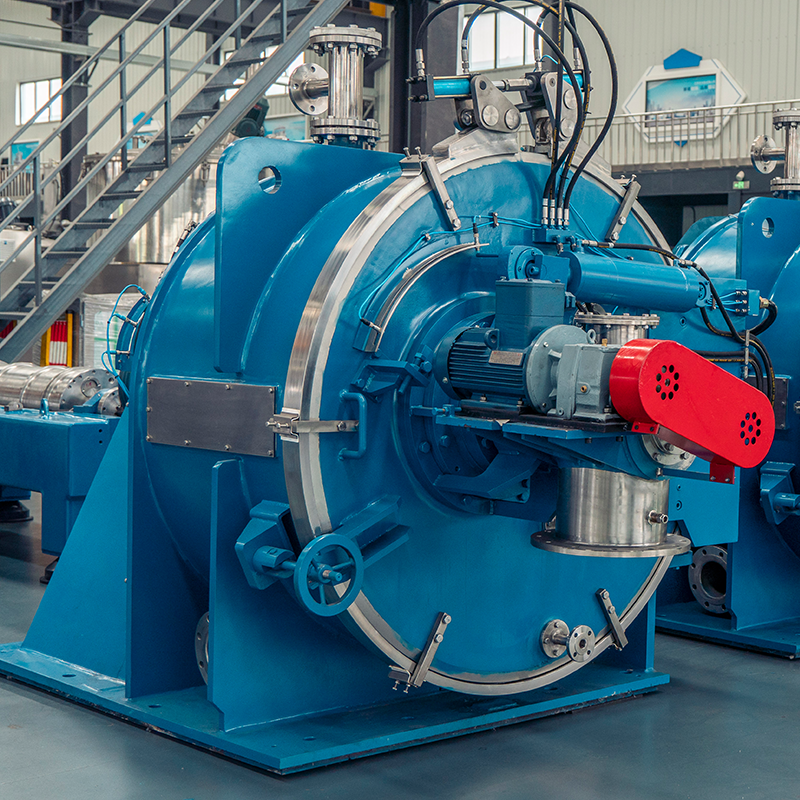
Regardless of whether you deal with chemicals or pharmaceuticals, you understand the importance of the auto scraper centrifuge. A dependable machine that separates solids from liquids, batch after batch. They are designed to handle the most strenuous of processes. However, like all machines, they do need regular maintenance, and that costs money. Knowing the maintenance costs and how to control them will help you get the most out of your investment.
The analogy here is like owning a car. While you can buy a car, ownership comes with a number of costs that recur over time, such as fuel, insurance, and maintenance. The same can be said for a centrifuge. The purchase price is only the beginning, as the incremental costs associated with maintenance allow the centrifuge to run optimally, safely, and profitably for years to come. Experienced companies like Huada, with over 30 years and 120+ patents, understand the value of whole lifecycle design. They recognize that ease of maintenance design translates into a cost savings for the owner. So, let’s look at the various elements of the maintenance costs of an auto scraper centrifuge.

When it comes to the factors that influence long term maintenance costs, the most significant is the quality of the machine you buy. It’s a prime example of ‘you get what you pay for.’ A centrifuge that is constructed from inferior materials and less sophisticated design and engineering will have a lower purchase price, but will end up costing you much more over its operational life.Consider the details. A quality auto scraper centrifuge is made with quality materials, for example, high-grade stainless steel for the basket and housing if it is going to be used with corrosive materials. The seals, bearings, and scraper mechanism will be made with durable materials. A manufacturer that invests in quality and has a strong workforce and quality control will have parts made to high specifications which minimizes breakdowns and replacements. Spending that money initially will minimize maintenance costs in the future. A quality centrifuge is made to be reliable and durable, as well as productive.
All machines have parts that wear out faster than others. In the auto scraper centrifuge, the parts that need to be monitored closely are the bearings, seals, and the hydraulics or mechanics that operate the scraper. The bearings carry the load of the rotating assembly and if they fail, it can cause vibrations and severe destruction. This is a situation that could be highly preventable with routine maintenance. Quality bearings will also improve the mean time to failure.
An additional focal point is seals. Seals help to avoid the leaking of potentially dangerous or valuable materials. When seals are worn or defective, they can cause leaks, which can present unsafe conditions, product loss, and a mess to clean up. The scraper blade itself also wears down over time, especially if it is handling abrasive solids. In a business, managing upon critical wear parts and understanding their life spans can greatly help to reduce costs. Thus, management can budget for the costs associated with parts replacement during planned maintenance cycles, as opposed to incurring the costs and disruptions due to unplanned emergency shut downs.
The most efficient method of managing costs for maintenance is the existence of a good preventative maintenance plan. This is the difference of being proactive versus reactive. Rather that waiting for something to fail, you have regular maintenance and inspections performed. In the case of manufacturers, upon their experience of their global operation, they can provide additional maintenance guidelines, which can optimize your planned maintenance process.With an automatic scraper centrifuge, weekly inspections might need to be done for scraper blades and seals, monthly inspections for belt tension and bearing temperature, and every six months or annually for everything else. During these inspections, minor issues are identified, such as a wear on a seal or a small vibration, before turning into major failures. Sort of like an oil change on a car to protect the engine. It costs a little on a regular basis, but it can save you from a huge expense of replacing an engine. Having a solid preventative maintenance plan is key to ensuring your centrifuge has a longer lifespan and maintenance costs are kept from skyrocketing.
In maintenance and repair of any facility/tool, the immediate costs of a breakdown usually associated are the components that were damaged, and the labor required to install the new component so the tool is operational again. Less associated is the potential costs of production that are lost as a result of the tool not being operational (downtime). Unscheduled repairs of the automatic scraper centrifuge can cause complete production shutdown because there is a potential for loss of output, missed production deadlines, and subsequent dissatisfaction from customers. In some continuous processes, a shutdown can have a cascading effect that halts entire production lines.
A case for both quality equipment and preventative maintenance can be made here. Reliable machinery, for example, breaks down less. Additionally, as you minimize unplanned machine stoppages, it's often maintenance that lets you schedule repairs during planned downtimes. Planned downtimes could be over the weekend or during a plant shut down, and would be far less disruptive than during an active production run. In fact, the maintenance done on a centrifuge would save you money, far above the cost of the individual parts due to the reduction of unplanned downtimes.
Even with a preventative maintenance program and quality equipment, you will need help from experts. In this case, the manufacturer's service team becomes an important aspect of the cost equation. A service team that is quick to respond and is knowledgeable about the machine can save you money. The machine is down for the least amount of time because they can diagnose the problems faster, get the needed parts to you quicker, and get it running again. Every hour they save you is money in your pocket.
Some companies give reliable expert advice on their dedicated service teams, like Huada, who have 57 service personnel and decades of on site experience. They have guidance on optimizing maintenance activities for thousands of customers. That relationship with the manufacturer will help control costs. It’s not about maintenance and repairs, it’s about providing a service so the equipment continues to function without the need for constant repair interventions.
This brings us to spare parts and technological advancement. Huada has over 40 series and 200 models and will likely support their equipment for decades. This means genuine parts will be available when needed, not cheaper parts that could create further damage.Also, look for a manufacturer that emphasizes innovation. For example, newer seal designs or more durable bearings that can be retrofit to older machines can lower maintenance costs and improve machine reliability. These types of innovations protect your initial investment because strong research and development can extend the effective life of your machines.
Ultimately, managing the maintenance costs of an auto scraper centrifuge is more than just cost-saving measures. It is about making the right decisions, starting at the purchase of the machine and extending to the daily use of the machine. It is about investing in innovation, taking ownership of a preventative maintenance program, and developing a relationship with the manufacturer that enables you to optimize the use of your centrifuge. When you do this, the centrifuge goes from being a cost center to an asset that benefits your business for a long time.
 Hot News
Copyright © 2025 Jiangsu Huada Centrifuge Co., Ltd. All Rights Reserved Privacy policy
No. 88 Qigan Road, Yangshe Town, Zhangjiagang City, Jiangsu Province, China
Copyright © 2025 Jiangsu Huada Centrifuge Co., Ltd. All Rights Reserved Privacy policy
 EN
EN
 AR
AR
 HR
HR
 CS
CS
 DA
DA
 NL
NL
 FI
FI
 FR
FR
 DE
DE
 EL
EL
 HI
HI
 JA
JA
 KO
KO
 NO
NO
 PL
PL
 PT
PT
 RO
RO
 RU
RU
 ES
ES
 SV
SV
 TL
TL
 ID
ID
 LT
LT
 SR
SR
 SK
SK
 UK
UK
 VI
VI
 HU
HU
 TH
TH
 TR
TR
 FA
FA
 MS
MS
 IS
IS
 LO
LO
 LA
LA
 MN
MN
 MY
MY
 KK
KK
 UZ
UZ
 IT
IT